 Murano and Burano Tours
Murano vs Burano: Which Is Better?
Which is better, Murano or Burano? Travellers type "murano vs burano which is better" because the two islands look interchangeable and could not be less so. Murano vs Burano is the lagoon's most useful argument: two working islands, two crafts, two completely different reasons to love them. This guide walks the comparison island by island, glass against lace, workshops against painted houses, and ends with the verdict for each traveller type, inside the full Murano and Burano tours comparison. The one-line answer: Murano is for the furnace, Burano is for the eye, and the day should almost always include both.
Quick answer Murano: working glass town, furnaces, museum. Burano: painted houses, lace, the photographs. Pick both.
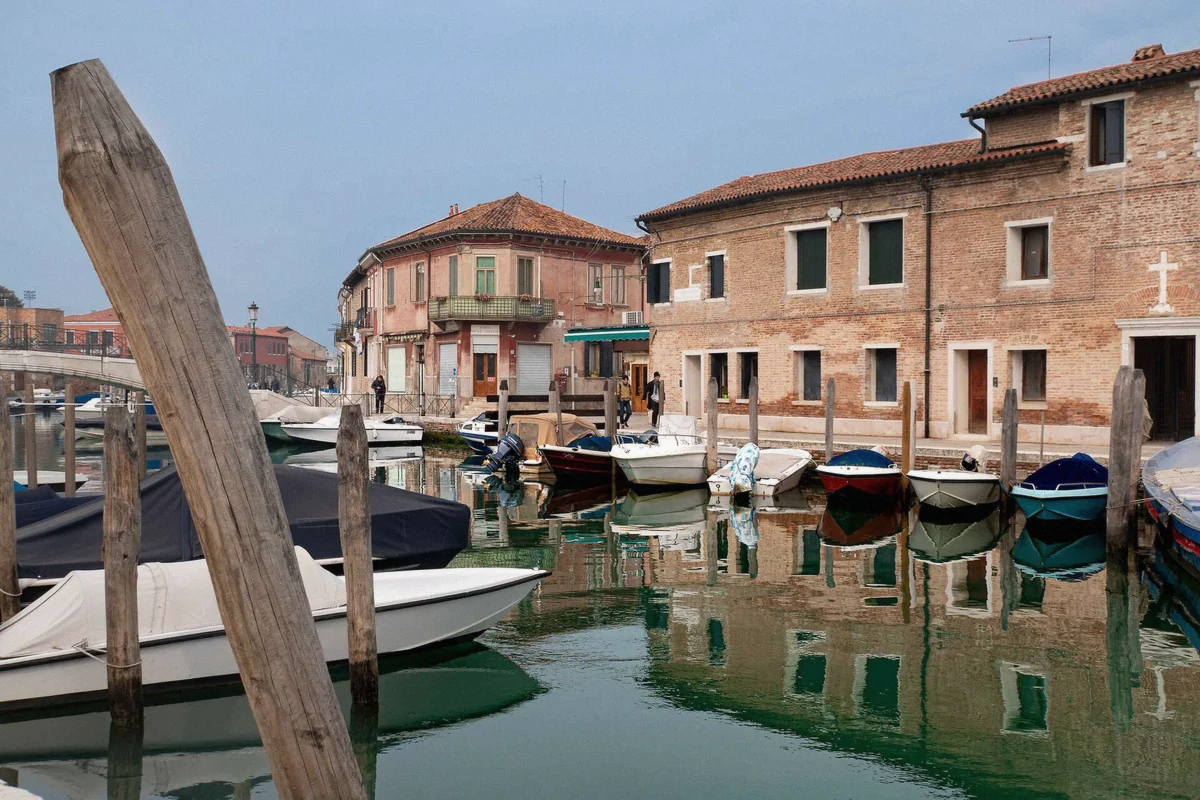
Murano is a working glass town of about 5,000 residents across nine islets, furnaces, the Glass Museum's six centuries, the 12th-century mosaic floor of Santi Maria e Donato, worth 1-2 hours with a demonstration included. Burano is a fishing and lace island of roughly 2,000 residents on four quarters split by canals, the regulated house palette, the Lace Museum, the leaning campanile, worth 2-3 hours and most of the route's photographs. Travellers forced to pick one name Burano; the standard day visits both, 30 minutes apart by boat, which is why every tour format here does exactly that.
Key takeaways
- Murano earns its time through the furnace, no demo, no point; book a format that includes it
- Burano is the highlight reviewers name, and the island where 2-3 hours beat 50 minutes
- Torcello, the quiet third island, gets its own verdict in the three-island guide
Murano vs Burano, Factor by Factor
The two islands against each other on everything a visitor actually experiences.
| Factor | Murano | Burano | Book |
|---|---|---|---|
| Famous for | Glass, six centuries, still furnace-made | Colour + needle lace | |
| Scale | 9 islets, ~5,000 residents | 4 quarters, ~2,000 residents | |
| Signature sight | Furnace demonstration; Glass Museum | Painted canals; leaning campanile | |
| Museum | Glass Museum (Palazzo Giustinian) | Lace Museum (Piazza Galuppi) | |
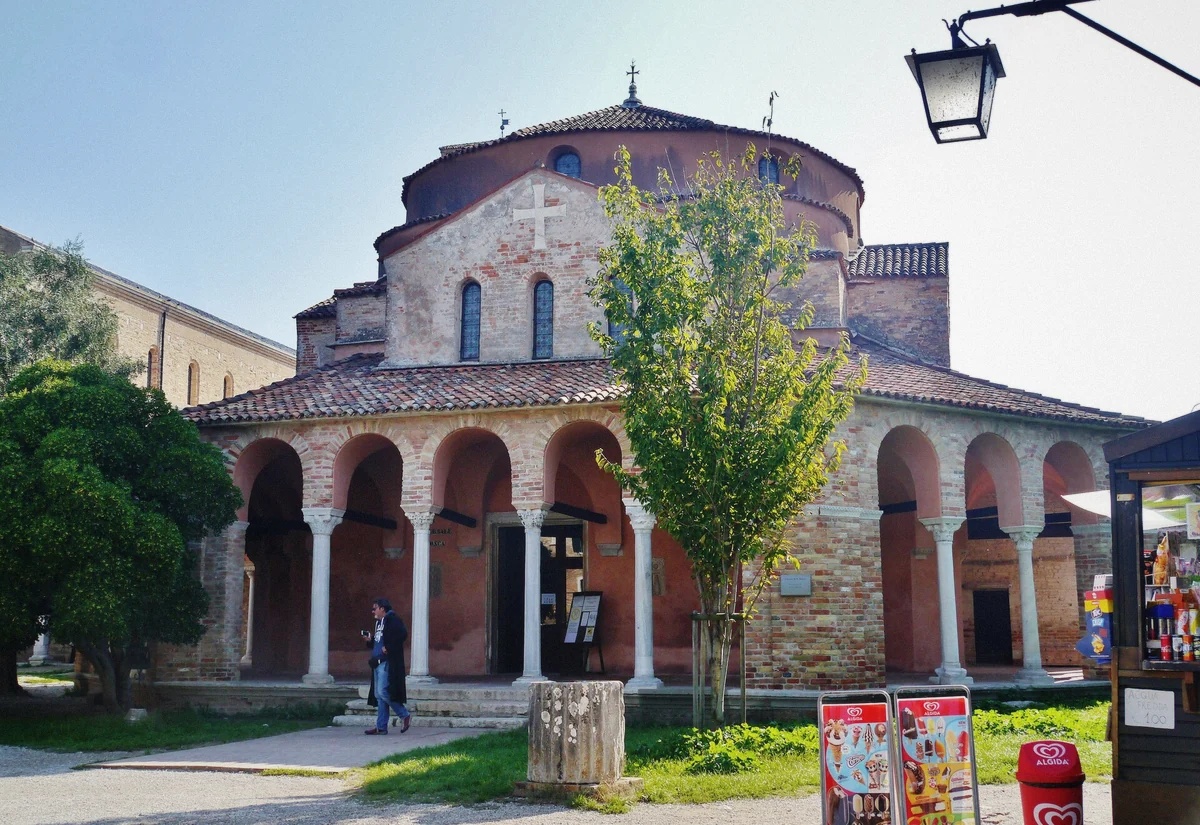
| Church | Santi Maria e Donato, 12th-c. mosaic floor | San Martino, sober brick beside the colour | |
| Souvenir | Trademarked glass from 15-30 EUR | Needle lace from hundreds; machine lace from single digits | |
| Time it deserves | 1-2 hours with a demo | 2-3 hours with lunch | |
| Crowds | Moderate, shops absorb them | Heavy 11:00-15:00 at the photo bridges | |
| Verdict for | Craft-lovers, buyers | Photographers, romantics, everyone |
Murano: Glass, Six Centuries Deep
The glass island is a working town that happens to sell its craft, not a mall that happens to have furnaces, and the distinction shapes the whole visit.
The furnace is the argument
The guilds moved Venice's glassworks to Murano in 1291, fire risk, the chroniclers say, and the island has been making glass continuously since. The demonstration, which every tour on this route includes, is the craft at conversational range: a master gathers molten glass on the pipe, shapes it in minutes with tools unchanged in centuries, and the finished piece, a horse, a goblet, a bird, exists because you watched it being born. Without the demo, Murano is a shopping street with heritage signage; with it, the island makes sense.
Beyond the showroom
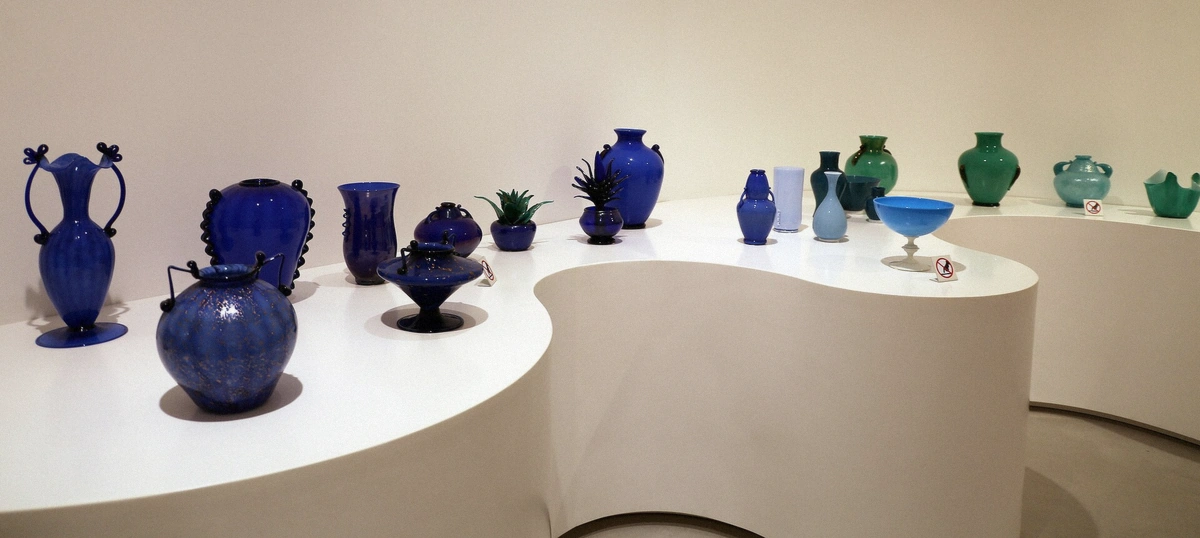
The Glass Museum in Palazzo Giustinian spans the 15th century to the modern masters, the deep history the showrooms sample. The Basilica dei Santi Maria e Donato keeps a 12th-century mosaic floor that outclasses anything its size in Venice, and the legend of the dragon bones beside the altar. And the far side of the island, boatyards, the Parco degli Angeli, canals without shop windows, is five minutes from the crowds and a different century.
Buying honestly
The island's windows mix genuine furnace-made glass with imports, and the defence is one word: Vetro Artistico Veneziano, the official trademark of glass actually made on Murano. Small trademarked pieces start around 15-30 EUR; the venue discounts on several tours apply at workshops you have just watched work. The cost guide prices the ladder in full.
Burano: Colour, Lace and the Leaning Tower
Burano is the island people photograph and the island they remember, and its two crafts are one craft at different volumes.
The colour is administration, not accident
The houses are repainted under rules: residents choosing a new colour submit to the municipality, which approves from a regulated palette historically tied to the fishing families' visibility in fog. The result is the most photographed streetscape in the lagoon, four quarters split by canals, every wall a decision. Casa Bepi, the most elaborately painted house, carries its geometric squares freehand, the one documented rebellion the island forgives.
Lace: the real thing and the economics of it
Burano's needle lace is the island's original fame, work so fine it served European royal courts, and its survival story is delicate: the Lace Museum on Piazza Galuppi occupies the building of the lace school that ran from 1872 to 1970, and genuine handmade pieces today come from a small circle of ageing masters, priced honestly in the hundreds of euros. Machine-made lace fills the shops in the same colours at single-digit prices; both are lawful purchases, only one is the island's craft.
The campanile and the quiet corners
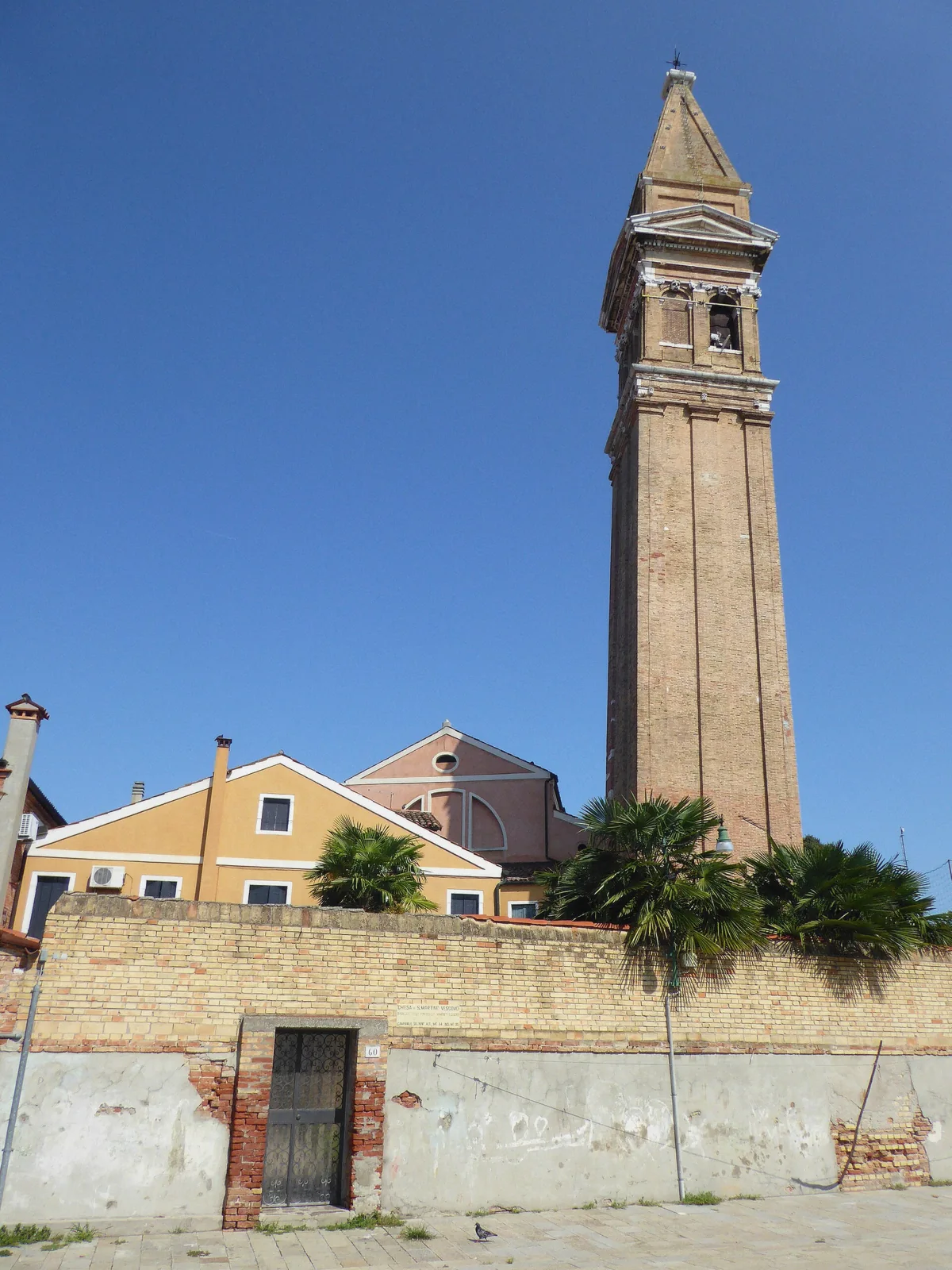
San Martino's brick bell tower leans visibly, the lagoon's own miniature answer to Pisa, and photographs best from the square behind the church. Past via Galuppi, the eastern quarters keep village rhythm: laundry, fishing gear, a bar with three tables. Two hours here disappears; fifty minutes is the complaint the compressed tours generate.
Atmosphere: Working Island vs Painted Stage Set
The hardest difference to photograph and the easiest to feel, the two islands' daily character.
Murano works; you watch
The island's rhythm is industrial, furnaces, deliveries, the boatyard's hammering on the far shore. Visitors move through a working town's间隙, and the shops are its public face rather than its purpose. The feeling is closer to Venice's own Arsenale quarters than to a theme park: proud, functional, slightly indifferent to the camera.
Burano performs; you participate
Burano's beauty is frontal and unashamed, the houses present themselves to the canal like a set, and the visitor's role is delighted audience. The lace ateliers add the craft-depth that keeps it from being only a photo stop. The crowds follow the beauty, which is the island's one tax; the far quarters refund it.
Torcello, the third possibility
Between and beyond both sits Torcello, the lagoon's first-settled island, now a grassy meadow with two ancient churches and near-silence. It is not in the Murano-vs-Burano argument; it is the argument's intermission, and the six-hour day and the private charter are the formats that sell it.
Food and Stops on Each Island
Lunch is a planning decision on this route, the islands eat differently, and the tours make no promises about it.
Burano for the table
Burano is where the meal happens: canal-side seafood restaurants, the risotto di gò (lagoon goby) as the local classic, and the bakery's bussolai, the ring-shaped butter cookies made to travel. The canal-side tables fill early in season; the tour slots that land before noon eat well, and the timing guide explains how the slots distribute.
Murano for the glass of wine
Murano's eating is humbler, cicchetti-style bars, a spritz with a canal view, the occasional restaurant aimed at locals from the far quarters. The island's lunch logic is a snack between furnace and museum, not a sitting. Travellers who prioritise the meal plan it on Burano and let Murano keep the morning.
The gelato clause
The reviews of the extended-Burano tickets converge on one sentence more than any other: the island has the best gelato. It is not data; it is unanimous. Budget the 3 EUR and skip the argument.
Who Picks Which Island
If crafts, furnaces and buying glass are the point
Murano leads your day, book a format with a real demonstration and factory time
If photography, colour and the postcard lagoon are the point
Burano leads, and deserves 2-3 hours, which the extended ticket sells
If you are travelling with mixed priorities
the two-island formats are the answer, they run both islands in the classic order
If you want neither argument settled but both islands quiet
Torcello via the six-hour day, the third island nobody argues about
Which Island First, and How They Connect
The order question has a settled answer and a transit logic worth knowing whichever format you book.
Murano first, always
The furnaces work hardest in the morning; Burano's light and lunch belong to the afternoon. Every tour on this route runs Murano-first in the classic arc (with dock traffic the stated exception), and DIY travellers on the vaporetto should copy the pattern, the route guide maps it line by line.
The hop between them
ACTV line 12 links Murano Faro with Mazzorbo in about 24 minutes, and Burano waits across the footbridge, departures roughly every half hour, a single 9.50 EUR ticket within its 75-minute validity. Tour boats make the hop directly in 30-35 minutes. The islands are close enough that no format needs to choose.
Mazzorbo, the bridge between
The hop crosses Mazzorbo, the quiet island with orchards and the lagoon's rare Dorona vineyard, walkable in ten minutes, missed by every tour. It is the DIY route's secret reward and the honest answer to what is between the islands: a garden.
A Second Visit Changes the Verdict
The Murano-vs-Burano question has a different answer on your second lagoon day, and knowing it changes how you spend the first.
First visit: the classic pair
First-timers should not choose, the two-island formats exist because the pair tells one story: the craft and its colour, the working town and its painted stage set. Murano's furnace in the morning, Burano's light after lunch, home by mid-afternoon. It is the recommended arc for a reason, and the reason holds whether you spend $29 or $51 on it.
Second visit: the islands you missed
Return visitors flip the script: Murano's far side, the boatyards and the Parco degli Angeli; Burano's eastern quarters past the photograph bridges; and above all Torcello and Mazzorvo, the quiet islands the tours skip or rush. The vaporetto pass is this trip's format, and the route guide is its map.
The specialist visits
Buyers' trips run to Murano's working studios (some still demonstrate on request outside season); lace-seekers' trips run to Burano's ateliers on Piazza Galuppi with the museum first for context. Photographers' trips run twice, once per light. None of these need a tour, which is the honest boundary of the comparison's jurisdiction.
Two Islands, One Origin Story
A minute of history explains why the islands are so different, and why both exist at all.
Refugees, then guilds
Both islands were settled by mainland refugees fleeing the invasions that razed Altino, the same waves that filled Torcello and founded the lagoon's first churches. Each island found its trade because the lagoon gave it one: Murano's position and water power suited the furnaces the republic moved out of Venice in 1291 (fire was the reason the chroniclers gave); Burano's boats fished and its women threaded the nets the boats needed, and from those nets came needle lace.
The republic's monopolies
Venice ran both crafts as state monopolies: Murano's glass masters were so valuable they were legally barred from leaving the republic, the law reads like flattery, and Burano's lace served European courts through Venetian middlemen. The islands' fame is five centuries of export economics, which is why the crafts' survival debates today feel like family arguments: they are.
The modern chapter
Mass tourism arrived after the Second World War and re-priced both islands' real estate and rhythm, Murano still makes glass at industrial scale on its edges; Burano still fishes, visibly, between the photograph bridges. The villages behind the shops are the fact first-time visitors most often miss and second-time visitors most often come back for.
The Islands at a Glance
The comparison compressed to one table, numbers first, verdicts in the prose above and below.
| Factor | Murano | Burano | Torcello (the tiebreaker) | Book |
|---|---|---|---|---|
| Trade | Glass, furnace-made | Lace + fishing | None, memory and mosaics | |
| Time needed | 1-2 hours with demo | 2-3 hours with lunch | 1 hour, unhurried | |
| Museum | Glass Museum, Palazzo Giustinian | Lace Museum, Piazza Galuppi | Provincial museums by the basilica | |
| Church | Santi Maria e Donato | San Martino | Santa Maria Assunta (5 EUR) | |
| Crowd peak | Moderate, all day | 11:00-15:00 hard | Rarely | |
| Ticket formats | Every tour stops here | Every tour stops here | 3-island + charter only |
Torcello is the tiebreaker: not on every route, worth the crossing.
So Which Island Wins?
The verdict section, by traveller, with the honest caveat that the day should almost always include both.
For the eye: Burano, and it is not close
The painted canals, the leaning campanile, the light on the water, Burano is the island people came to photograph and the one they leave raving about. Reviews across every tour format name it the highlight; the main complaint is not having long enough there, which is an argument for the extended ticket, not against the island.
For the mind: Murano, with a condition
The furnace demonstration is the route's most mind-catching hour, and the Glass Museum gives it six centuries of depth. The condition is the demo: without it, Murano's case collapses into shopping. Book formats that include the demonstration, which on this route is all of them, and give the island its hour.
For the day: both, in the classic order
The honest verdict of every format comparison: Murano first in the morning furnace hours, Burano for lunch and the afternoon light, home by mid-afternoon. The two-island day is not a compromise between the islands; it is the correct way to see either. The only real decision is how much Burano time to buy, and the answer is more than you think.
The Colour, on Film
Burano's painted quarters on film, the island that wins the photograph argument. Third-party video; we have no relationship with its creator.
The Two Islands: Questions Answered
Can I do Murano and Burano in one day?
Easily, it is the standard format. Murano 1-2 hours with the demonstration, Burano 2-3 with lunch, thirty-odd minutes of crossing between: a 4.5-hour tour does both briskly, a DIY day does both with room for Torcello. One day covers the islands; the mistake is trying to cover the islands and central Venice in the same day.
Is it worth visiting both Murano and Burano?
Yes, they are opposites rather than repeats: a working glass town and a painted fishing village. Travellers forced to choose consistently pick Burano for the eye and Murano for the furnace, and the pair costs only a 30-minute crossing more than either alone, which is why every tour format visits both.
How long do I need in Murano and Burano?
One to two hours on Murano with the demonstration included; two to three on Burano with a meal. Fifty minutes on Burano, what the compressed three-island formats allow, is the route's most common regret, and the reason the 3-hour Burano ticket exists.
Can I go from Murano to Burano?
Yes, public line 12 runs Murano Faro to Mazzorbo in about 24 minutes (Burano across the footbridge) roughly every half hour on a single 9.50 EUR ticket; tour boats make the hop directly in 30-35 minutes. The islands' proximity is the whole reason the two-island day works.
Which island is better for kids?
Burano, by the evidence: open quays, the leaning tower, gelato within reach and colour everywhere, while Murano's shops and furnaces need closer supervision. The ideal family day runs Murano's demonstration in the morning furnace hours and gives Burano the long afternoon stop.
Which island should I buy on?
Both honestly, different rules: on Murano buy trademarked, the Vetro Artistico Veneziano sticker is the certification of furnace-made glass, small pieces from 15-30 EUR. On Burano buy with your eyes open about the price: hundreds of euros means handmade needle lace, single digits means machine-made, and the middle bracket deserves questions. The cost guide prices both ladders.
Is Murano worth visiting if I have already seen glassblowing?
Then come for the rest of the island: the Glass Museum's six centuries, the 12th-century mosaic floor of Santi Maria e Donato, the boatyards and quiet canals of the far side. The demo is the headline, not the island, and second-time visitors consistently find the far Murano the lagoon's best surprise.
Can you walk Burano in one hour?
The postcard loop, via Galuppi, the photograph bridges, the leaning campanile, yes, in an hour at a brisk pace. The island that reviewers rave about needs two to three: the Lace Museum, the far quarters, a canal-side table. One hour covers the sights; two covers the island.
Which island is cheaper to eat on?
Murano, mildly: its bars and cicchetti stops undercut Burano's canal-side restaurants, which trade on the view. The honest lunch strategy is Murano snack, Burano sitting, the extended Burano tickets exist precisely because the sitting deserves the time.
Do the tours give enough time on both islands?
The two-island formats do: an hour-plus on Murano with the demo and 1.5 hours on Burano is the standard arc. The compressed three-island formats cut Burano to about 50 minutes, the route's most-cited regret, so depth-seekers should book the 3-hour Burano ticket or the six-hour day.
Where This Fits in the Wider Comparison
Both islands sit inside compare all Murano and Burano boat tours, the same water, nine ways to buy it.
The one-page view
The homepage table lines every ticket up on guiding, group size, island time and price, the three columns this kind of decision actually turns on. Reading those next to the arithmetic here is the whole comparison in ten minutes: what each ticket costs, what it includes, and what it asks in return.
Keep one habit
Whichever ticket wins, book it with the free-cancellation window in mind and check the fare again a week before travel. The platforms reprice quietly, and the reserve-now-pay-later checkout means switching costs nothing but a click.